
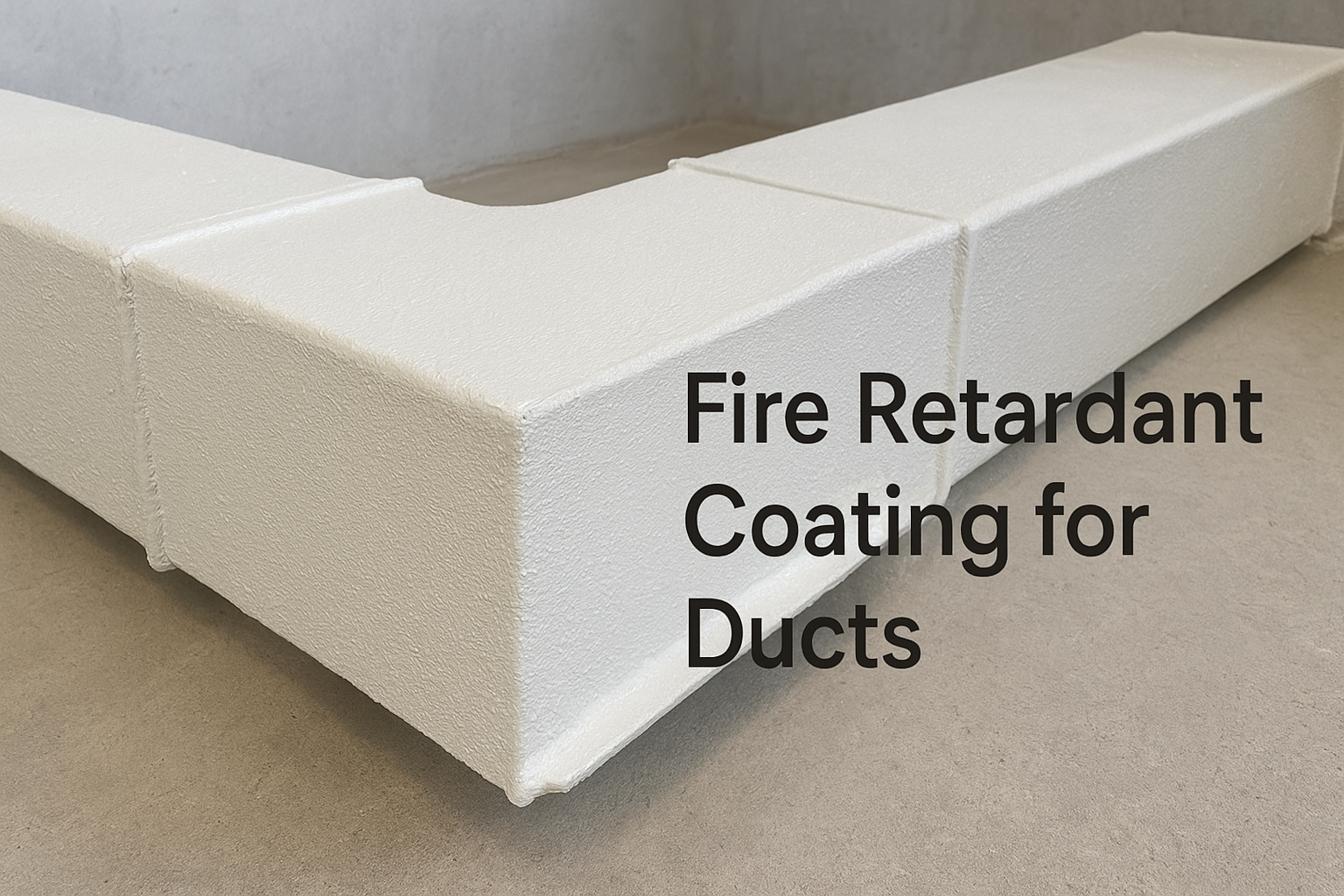
Fire safety is one of the most critical considerations in any residential, commercial, or industrial building. While most people think of sprinklers, alarms, and extinguishers as the primary components of fire protection, ducts and ventilation systems also play a major role in controlling how fire and smoke spread. This is where fire retardant coating for ducts becomes essential.
Whether you are dealing with HVAC ducts, kitchen exhaust ducts, electrical ducts, or GI sheet metal ducts, applying a certified fire retardant coating can significantly enhance building safety, meet fire safety regulations, and reduce the risk of catastrophic fire damage.
In this article, we’ll explore what fire retardant coating for ducts is, how it works, its advantages, and why it is now a standard requirement across industries.
What Is Fire Retardant Coating for Ducts?
Fire retardant coating for ducts is a specialized protective material applied to the external or internal surface of ducts to prevent fire spread, reduce heat transfer, and contain smoke. These coatings are typically intumescent, meaning they expand when exposed to high temperatures and create an insulating char layer.
This expanded layer protects the metal duct from:
-
Excessive heat
-
Fire penetration
-
Structural distortion
-
Smoke leakage
Why Do Ducts Need Fire Protection?
Ducts run across the entire building, connecting multiple rooms and floors. In the event of a fire, they can act like channels, allowing fire and smoke to travel rapidly.
Here’s why fire retardant coating is crucial:
1. Prevents Fire Spread
Fire can travel through unprotected ducts, especially in kitchen exhaust systems, where grease deposits can ignite quickly.
2. Maintains Structural Integrity
Metal ducts can weaken or collapse under extreme heat. Fireproof coatings slow down heat transfer, giving occupants more time to evacuate.
3. Compliance with Fire Safety Regulations
Many jurisdictions mandate fire-resistant treatment for ducts under:
-
NFPA standards
-
BS 476 Part 24
-
UL classifications
-
Local building codes
4. Protects HVAC Systems
HVAC ducts are vulnerable during fire outbreaks. Fire retardant coating helps ensure that the ventilation system does not circulate smoke throughout the building.
5. Reduces Smoke Leakage
Intumescent coatings seal duct openings, reducing smoke migration and improving overall fire containment.
Types of Ducts That Require Fire Retardant Coating
Fire retardant coatings are used across different duct types in industrial and commercial establishments:
1. HVAC Supply and Return Ducts
These ducts circulate air across the building, so applying fire-resistant coating helps prevent smoke movement.
2. Kitchen Exhaust Ducts
High-risk ducts with grease deposits—these are mandatory in hotels, restaurants, and industrial kitchens.
3. Pressurization and De-pressurization Ducts
Used in staircases and fire exits; must be fire-protected to maintain airflow during emergencies.
4. Electrical and Cable Ducts
Protect wiring pathways from fire exposure and reduce the chance of short-circuit-driven fire spread.
5. GI Sheet Metal Ducts
Galvanized iron ducts are widely used but heat-conductive. Fire coating improves their fire rating.
How Fire Retardant Coating Works
Fire retardant coatings for ducts are usually of two types:
1. Intumescent Coating
-
Expands 20–50 times its original thickness when exposed to fire.
-
Forms a thick, foam-like char layer that insulates the duct from heat.
-
Ideal for achieving 1-hour to 3-hour fire ratings.
2. Cementitious / Non-Intumescent Coating
-
Forms a solid protective barrier.
-
Suitable for industrial ducts requiring robust thermal insulation.
Performance Features
-
Delays ignition
-
Reduces heat conduction
-
Maintains duct stability
-
Prevents fire from entering/exiting the duct
-
Blocks smoke
-
Meets fire resistance classification (up to 240 minutes)
Benefits of Fire Retardant Coating for Ducts
1. Enhanced Fire Safety
Fire retardant coatings provide extra time for evacuation, fire control, and rescue operations.
2. Increased Durability
Coated ducts are more resistant to corrosion, moisture, and wear, extending their lifespan.
3. Cost-Effective Fireproofing
Compared to replacing ducts or installing bulky fire wraps, coatings are:
-
Affordable
-
Faster to apply
-
Low maintenance
4. Lightweight Solution
Does not add significant weight to the ducts, which is crucial for suspended systems.
5. Seamless and Aesthetic
Unlike wraps or boards, coatings maintain a clean, smooth finish.
Application Process of Fire Retardant Coating
The performance of fire retardant coatings largely depends on proper application. Here’s a typical step-by-step process:
1. Surface Preparation
-
Cleaning the duct surface
-
Removing dust, grease, or loose particles
-
Ensuring proper adhesion
2. Priming
A fire-resistant primer is applied to improve bonding.
3. Coating Application
-
Applied using brush, roller, or airless spray
-
Thickness monitored with a wet film gauge
-
Multiple coats may be required
4. Drying and Curing
Proper curing ensures durability and fire resistance.
5. Inspection and Certification
Final inspection ensures coating meets fire safety standards.
Key Industries Using Fire Retardant Duct Coating
-
Commercial complexes
-
Hospitals & laboratories
-
Industrial plants
-
Residential high-rises
-
Data centers
-
Hotels & restaurants
-
Manufacturing facilities
These sectors require strict compliance with fire norms and benefit greatly from duct fire protection.
Conclusion
Fire retardant coating for ducts is a critical fire safety measure that strengthens ductwork, prevents fire spread, and ensures compliance with building safety standards. Whether it’s HVAC ducts, kitchen exhaust ducts, or GI sheet metal ducts, applying certified fire-resistant coating is a smart and essential investment.
With rising fire safety requirements and more awareness about risk management, fire retardant duct coating has become a standard practice in modern construction and facility maintenance.